
Working Out With Your Child: 10 Partner Exercises for Moms and Kids

A mom and her two children laughing while doing yoga poses in a park with bright colorful balloons.

Getting exercise as a parent is genuinely difficult — not because of willpower, but because the logistics of childcare and the demands of a baby or toddler make carving out solo workout time nearly impossible. The solution that works for many parents: make the child part of the workout.

This isn’t about forcing a toddler through a fitness routine. It’s about using your child’s weight as resistance, making movement playful, and getting a real workout while keeping them engaged. Here’s what actually works, organized by what you need (not much) and what your child can do.

What You Need

For baby/infant exercises (under 6 months): a stable floor surface, a mat, and a baby with good head control for the exercises that involve lifting.

For toddler/preschool exercises (6 months – 4 years): same, plus enough floor space for both of you to move. A yoga mat for ground exercises is helpful but not required.

Check with your pediatrician before doing lifts or overhead movements with very young infants. The exercises that involve bouncing or jostling are for babies 3+ months with confirmed head control.

10 Partner Exercises

1. Baby Chest Press

Lie on your back with knees bent. Hold your baby securely on your chest, hands on their torso. Press them straight up, pause, lower back to your chest. This is a chest press with the added motivation of your baby’s face above you. 3 sets × 8–10 reps. Only for babies with head control; always support the neck.

2. Baby Squat (Child as Weight)

Hold your baby against your chest in a bear-hug position. Squat until thighs are parallel, drive through heels to stand. As your baby grows, this squat gets harder automatically — built-in progressive overload. 3 sets × 12 reps.

3. Airplane (Core + Back)

Lie on your back, knees bent to 90 degrees. Hold your baby tummy-down on your shins (they face forward like Superman). Slowly extend and flex your legs, keeping core tight. Babies who can hold their heads up love this. 3 sets × 10 slow reps.

4. Dance Cardio

Hold your toddler and dance to music for 3–5 minutes. Vary the pace, do squats during the chorus, add lunges. It counts as cardio. Your child thinks it’s hilarious. Do 2–3 songs back-to-back for a 10-minute cardio bout.

5. Toddler Wheelbarrow

For mobile toddlers: hold their ankles while they walk on their hands. You walk forward with them. This is a genuine upper body and core exercise for you, and a coordination challenge for them. 3 × 10 meters.

6. Piggyback Squats

Once your child is stable enough to hold on (typically 2+), let them ride on your back while you squat. Their weight (20–40 lbs typically) adds meaningful resistance. 3 sets × 10 reps.

7. Peekaboo Push-Ups

Get into a push-up position with your baby lying on the floor beneath your face. Do a push-up and make a silly face at the top of each rep. Keeps the baby entertained; keeps you doing push-ups. 3 sets × 8–10 reps.

8. Toddler Obstacle Course (You’re the Obstacle)

Set yourself up in a plank or bridge position. Your toddler crawls under you, over your legs, around you — they’re playing, you’re holding the position. Most parents can hold a plank significantly longer when they’re busy watching their child navigate around them. Sets of 30–60 second holds, 3 rounds.

9. Seated Row With Resistance Band (Baby on Lap)

Sit on the floor, legs extended, resistance band around your feet. Hold the handles and row toward your chest — your toddler can sit between your legs or on your lap for added fun. 3 sets × 12 reps.

10. Walking Lunges (Child “Racing” Alongside)

Walking lunges down the hallway while your toddler runs alongside. Make it a game — “can you beat me to the kitchen?” You do your lunges; they sprint. Repeat 3–4 times. Gets both of you moving.

Making It Work With a Baby Who Won’t Cooperate

Some sessions your baby will be perfectly happy. Others, they’ll want to be held constantly and nothing else. Build your workout around option B: exercises you can do one-handed or while holding them (squats, lunges, standing core work) should always be your backup plan.

Five minutes of squats while holding a fussy baby beats zero minutes of a planned workout that never started.

Safety Notes

  • Always secure your grip before any lift. If you’re unsure, don’t do it.
  • Keep lifting movements slow and controlled — no jerking motions with an infant.
  • Stop if your child shows any distress.
  • Don’t do overhead presses with babies younger than 3–4 months or any infant who hasn’t developed head control.
How to Build Your First HIIT Workout: Intervals, Exercise Selection, and Progressions

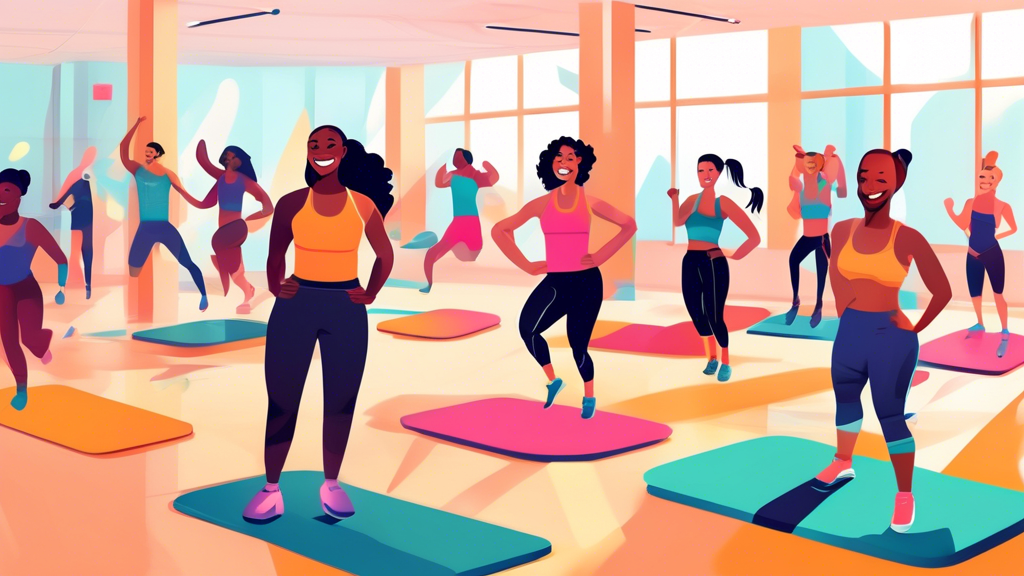
A diverse group of people smiling and doing a variety of HIIT exercises like burpees, jumping jacks, and mountain climbers in a bright and airy gym.

Most beginner HIIT guides give you a workout and tell you to follow it. That’s fine, but it doesn’t help you understand why the workout is structured the way it is — which means you can’t adapt it when you need to, fix it when it’s too hard or too easy, or build on it as you improve.

This guide explains the design principles behind HIIT so you can build a session that matches your fitness level, your goals, and the time you have. By the end, you’ll also have a complete sample workout you can use immediately.

The Core Variable: Work-to-Rest Ratio

The most important number in HIIT programming is your work-to-rest ratio — how long you work relative to how long you rest.

  • Beginners (first 4–6 weeks): 1:2 or 1:3 ratio. Example: 20 seconds work, 40–60 seconds rest.
  • Intermediate (3+ months of training): 1:1 ratio. Example: 30 seconds work, 30 seconds rest.
  • Advanced: 2:1 ratio. Example: 40 seconds work, 20 seconds rest.

If you’ve never done HIIT before, use 1:2. The shorter rest periods are something you work toward — they’re not a badge of seriousness, they’re a result of cardiovascular adaptation.

Choosing Exercises

Good HIIT exercises for beginners have three qualities: they’re high enough effort to elevate heart rate quickly, they’re low enough complexity to maintain form while tired, and they don’t create injury risk when your muscles are fatigued.

Beginner-friendly HIIT exercises:

  • Jumping jacks (or step jacks for low-impact)
  • Bodyweight squats
  • Mountain climbers (slow to moderate pace)
  • High knees
  • Alternating reverse lunges
  • Push-ups (any variation)
  • Plank holds
  • Step-ups (on a low surface)

Avoid exercises that require significant coordination or balance when you’re fatigued (box jumps, single-leg hops) until you’ve built a base. Also avoid loading the spine heavily (heavy deadlifts) in a metabolic fatigue state.

Structure your exercise selection to alternate upper and lower body, or full-body movements and core. This prevents any single muscle group from being the limiting factor — you can keep your heart rate up even as one area fatigues.

Session Structure

A complete beginner HIIT session looks like this:

  1. Warm-up (5 minutes): Light cardio and dynamic movement — arm circles, leg swings, marching, slow squats. Never skip this.
  2. Work intervals: 6–10 rounds of work-rest cycles. Total work time: 10–20 minutes depending on rounds and interval length.
  3. Cool-down (5 minutes): Slow walking, static stretches for the muscles you used — hip flexors, quads, hamstrings, calves.

Total session time: 20–30 minutes. You don’t need 45-minute HIIT sessions as a beginner. Shorter sessions done consistently outperform long sessions done rarely.

Sample Beginner HIIT Workout

Warm-up (5 min): 1 min light march in place → 1 min arm circles + torso twists → 1 min leg swings → 2 min slow squats and hip circles

Main circuit — 8 rounds, 20 sec work / 40 sec rest:

  1. Jumping jacks
  2. Bodyweight squat
  3. Mountain climbers
  4. Reverse lunge (alternating legs)
  5. Push-ups (full or modified)
  6. High knees
  7. Glute bridge
  8. Squat hold (bottom position, pulse)

Total work time: 2 min 40 sec. Total session time including rest: ~8 minutes of intervals. Add warm-up and cool-down for a 20-minute full session.

Cool-down (5 min): Walk in place 1 min → standing quad stretch 30 sec each side → hip flexor lunge stretch 30 sec each side → seated hamstring stretch 30 sec each side → deep breathing 1 min

How to Progress Over 4 Weeks

  • Week 1: 6 rounds, 20 sec work / 60 sec rest
  • Week 2: 8 rounds, 20 sec work / 50 sec rest
  • Week 3: 8 rounds, 25 sec work / 45 sec rest
  • Week 4: 10 rounds, 30 sec work / 40 sec rest

This progression gradually increases total work time and reduces rest time — both increase the cardiovascular demand in a controlled way.

How Often to Train

Two to three HIIT sessions per week is enough. More than three sessions per week for a beginner leads to insufficient recovery, accumulated fatigue, and a higher injury risk. The days between sessions are when your body adapts — skipping them doesn’t make you fitter faster.