Pilates for Menopause: How to Manage Weight and Build Strength at Home

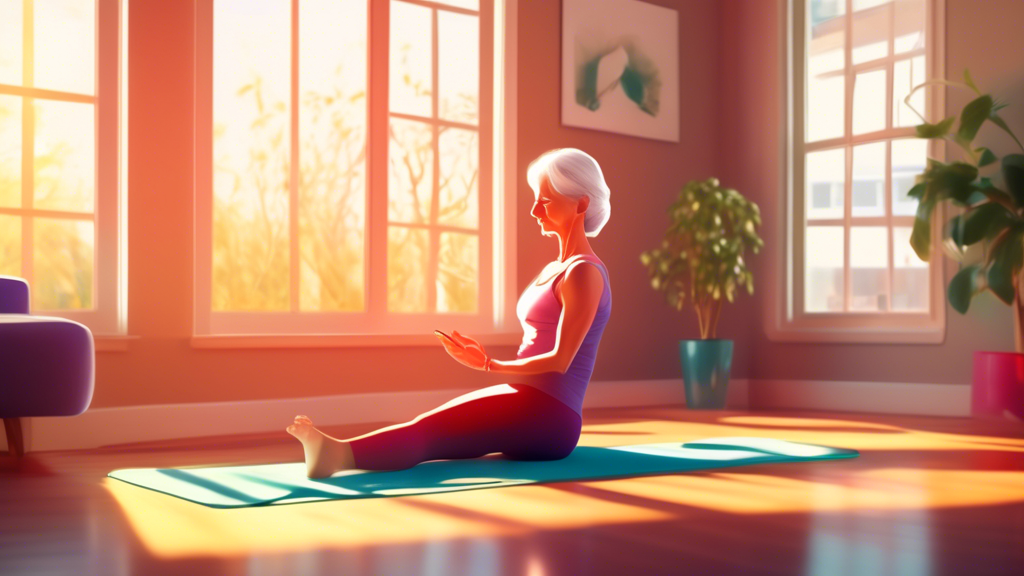
A serene woman in her 50s practicing pilates on a yoga mat at home, bathed in warm sunlight streaming through a window, her phone displaying a pilates workout app in the foreground.

Note: This article is for informational purposes only and is not medical advice. Consult your healthcare provider before starting any new exercise program, especially if you have bone density concerns, joint pain, or other health conditions associated with menopause.

Menopause brings significant physiological changes — declining estrogen shifts fat storage toward the abdomen, muscle mass decreases more rapidly, bone density drops, and sleep disruption affects recovery. Exercise is one of the most effective tools for managing all of these changes, and Pilates is particularly well-suited: it builds core strength and muscle density with low joint impact, improves posture, reduces stress, and supports the hormonal balance that influences weight management.

How Menopause Changes the Body (and How Pilates Responds)

Estrogen plays a key role in maintaining muscle mass, bone density, and metabolic rate. As estrogen declines, the body burns fewer calories at rest and loses muscle more quickly — a combination that drives weight gain many women experience during perimenopause and menopause even without changes in eating habits.

Pilates addresses this directly by:

  • Building muscle through resistance: Pilates movements use bodyweight and controlled resistance to build lean mass, which raises your resting metabolic rate.
  • Targeting the core and pelvic floor: These areas weaken significantly with declining estrogen. Pilates is uniquely focused on both.
  • Reducing cortisol: The controlled breathing and focused movement of Pilates reduces stress hormones that otherwise promote abdominal fat storage.
  • Improving bone density: Weight-bearing Pilates exercises stimulate bone remodeling, helping to slow the osteoporosis risk that accelerates post-menopause.

What You Need for Home Pilates

A mat is the primary requirement. A yoga mat or folded blanket works. Optional additions that significantly expand exercise variety: a Pilates ring (magic circle, approximately $20 to $30), a small resistance band, and a firm pillow for prop support. None are essential to start.

Core Pilates Principles to Know First

  • Neutral spine: The natural curve of the lower back should be maintained in most exercises — not flattened completely, not exaggerated. This protects the lumbar spine and properly recruits the deep core.
  • Engagement before movement: Before each exercise, gently draw your lower belly toward your spine — about 30% effort, not a full vacuum. This activates the transverse abdominis, the deep stabilizing layer that Pilates targets.
  • Breathing: Inhale to prepare, exhale on exertion. This coordinates breath with movement and prevents the tendency to hold breath under effort.
  • Control over speed: Slow, controlled movements with intentional muscle engagement outperform fast, momentum-driven reps in Pilates every time.

Key Exercises for Menopause

Pelvic Floor Activation

Lie on your back with knees bent. Gently contract the pelvic floor — think “lift and squeeze inward” rather than bearing down. Hold for 5 seconds, release for 5 seconds. Ten repetitions. This is foundational for bladder control and core stability, both commonly affected during menopause.

The Hundred

Lie on your back, legs lifted to tabletop (knees bent at 90 degrees) or extended at 45 degrees. Curl your head and shoulders up, arms extended at hip height. Pump arms up and down — 5 counts inhaling, 5 counts exhaling. Complete 10 full breath cycles. This challenges the deep core and improves circulation. Modify by keeping feet on the floor if neck strain occurs.

Single-Leg Stretch

From the same starting position, draw one knee to your chest while extending the other leg. Switch legs with controlled breathing — exhale as you pull the knee in. Ten repetitions per side. Works the obliques and hip flexors while requiring constant core stability.

Bridge with Progression

Lie on your back, knees bent, feet hip-width apart. Exhale and press through your heels to lift your hips to a straight diagonal from knees to shoulders. Hold 3 seconds, lower slowly. Ten repetitions. Progress by adding a hold at the top with a pelvic floor contraction. This strengthens the glutes, hamstrings, and lower back — the posterior chain that weakens with sitting and aging.

Side-Lying Leg Lifts

Lie on your side with your body in a straight line, lower arm extended under your head. Lift the top leg to about 45 degrees and lower slowly — don’t let it drop. Ten to fifteen repetitions, then repeat on the other side. Targets the abductors and outer glutes, which are critical for hip stability and fall prevention.

Swan Prep (Spinal Extension)

Lie face down, hands under your shoulders. Exhale and press partially up — lifting only your head, neck, and upper chest while elbows remain bent and forearms stay on the mat. Hold 2 seconds, lower. Ten repetitions. This counters the forward-rounding posture that worsens with age and strengthens the muscles along the spine.

A Complete 30-Minute Home Pilates Session

  1. Pelvic floor activation: 3 sets x 10 reps
  2. The Hundred: 1 set x 100 pumps (or build to this)
  3. Single-Leg Stretch: 10 per side
  4. Bridge: 3 sets x 12 reps
  5. Side-Lying Leg Lifts: 15 per side
  6. Swan Prep: 10 reps
  7. Child’s Pose: 1 minute
  8. Seated spinal twist: 1 minute per side

How Often to Practice

Three Pilates sessions per week is the minimum effective dose for noticeable change. On non-Pilates days, walking — 30 minutes at a brisk pace — complements the strength work and adds cardiovascular benefit that Pilates alone doesn’t provide. For bone density specifically, weight-bearing activity every day is ideal. Walking and standing Pilates movements both qualify.

Pilates and Weight Management During Menopause

Pilates alone is not a weight loss tool — it builds muscle and improves body composition, but the calorie burn per session is modest compared to aerobic exercise. The weight management benefit comes from the combination of increased lean mass (which raises resting metabolism), reduced cortisol (which reduces stress-driven fat storage), and improved sleep quality (which regulates hunger hormones ghrelin and leptin).

Pair Pilates with adequate protein intake (0.7 to 1 gram per pound of bodyweight), moderate calorie awareness, and daily walking for the most effective approach to weight during menopause. Pilates is the structural foundation; the other elements build on it.

Managing Common Menopause Symptoms Through Practice

  • Hot flashes: Exercise reduces frequency and severity in many women, though exertion can trigger them during sessions. Practice in a cool room, dress in moisture-wicking layers, and have water available.
  • Sleep disruption: Evening Pilates, finishing at least 2 hours before bed, improves sleep quality for most women by reducing stress hormones and physical tension. Morning sessions also work well — choose whichever you’ll maintain consistently.
  • Joint pain: The low-impact nature of Pilates makes it appropriate when joints are sensitive. Avoid movements that produce pain — modify rather than push through.
  • Mood changes: Exercise is a clinically supported intervention for menopause-related mood changes. The focused, mindful nature of Pilates provides additional benefit beyond the endorphin release of higher-intensity exercise.

Stop Waiting for Motivation: How to Build a Home Workout Habit That Runs on Systems

Please provide me with the article title and I will write a DALL-E prompt for it! 😊

Motivation is a feeling. Feelings fluctuate. After a long day, a poor night’s sleep, or a stressful week, motivation disappears. Waiting for it to return produces missed sessions, which produces guilt, which produces avoidance. This cycle is responsible for more abandoned fitness goals than any other single factor.

The people who exercise consistently for years don’t feel motivated every session. They’ve built systems that make workouts happen regardless of how they feel. This guide gives you those systems.

Why Motivation Fails

Motivation is strongest during the planning phase and lowest at execution time — specifically, when you need to begin. The gap between “I’ll work out tomorrow” (easy to agree to) and “I’m starting now when I’m tired and don’t want to” (hard to execute) is where most home workout habits die. No amount of planning or goal-setting bridges this gap by itself. Systems do.

System 1: Eliminate the Decision

Decisions require motivation. Pre-committed systems don’t. Schedule your workouts in advance: specific days, specific times, no flexibility until the habit is established. “I work out Monday, Wednesday, and Friday at 7 AM” is a system. “I’ll work out three times this week when I have time” is a decision — and it will consistently lose to the easier option of not starting.

Treat scheduled sessions like appointments you cannot cancel. If you must miss one, reschedule it to a specific time, not “sometime later.”

System 2: Reduce Startup Cost to Zero

The hardest moment is beginning. Everything that creates friction between deciding to start and actually starting is a barrier that motivation must overcome. Remove the barriers:
Put your workout clothes out the night before. Set up your mat or equipment before you go to bed. Load your workout video or app. Make the first step (putting on shoes, pressing play) require no decisions.

The two-minute rule: commit only to starting. Once you’ve done two minutes, continuing is easier than stopping. The workout will happen.

System 3: Make Missing Uncomfortable

A streak is a motivator. Track your workouts on a visible calendar. The longer the streak, the stronger the psychological resistance to breaking it — this is called the “don’t break the chain” approach. Missing one workout is a setback. Missing two is a new habit. Never miss twice in a row.

System 4: Identity Anchoring

Goals are outcomes. Identity is how you see yourself. “I want to lose 20 pounds” is a goal — it’s external, future-oriented, and fails the moment the scale doesn’t move. “I’m someone who trains three days a week” is an identity — it’s current, internal, and self-reinforcing. Every workout is evidence of that identity. Every missed workout contradicts it.

This is not just semantics. Research on habit formation consistently shows that identity-based motivation is more durable than outcome-based motivation, particularly when results are delayed (as they always are in fitness).

System 5: Design Workouts You Actually Like

Willpower is a finite resource. Grinding through workouts you hate draws from it constantly. Workouts you enjoy — because of the music, the format, the exercises, the time of day — don’t require willpower to initiate. Experiment with different styles until you find something you look forward to, or at minimum don’t dread. There is no single correct type of exercise. The one you’ll actually do consistently is the correct one for you.

System 6: Accountability Structures

External accountability works, and it doesn’t require a personal trainer. Options:
Public commitment: Tell someone specifically what you’ll do and when. Social accountability is a powerful motivator — we work harder to avoid letting others down than to achieve our own goals.
Training partner: Even remote — text someone when you finish each session. The act of reporting creates accountability.
Paid commitment: Pre-pay for a class or a program. Sunk cost motivates follow-through.

What to Do When You Don’t Want to Work Out

On genuinely hard days, use a modified session rather than no session. The minimum effective dose for maintaining the habit is 10 to 15 minutes. 10 minutes of push-ups, squats, and a plank is less fitness value than your full workout and more fitness value than nothing — and it preserves the habit and the streak, which are harder to rebuild than fitness once lost.

The decision isn’t full workout versus no workout. It’s full workout versus minimum session. The latter is always available and always the right choice when you have nothing left for the former.

No-Equipment Home Workout System: Build Real Fitness Without Spending a Dollar

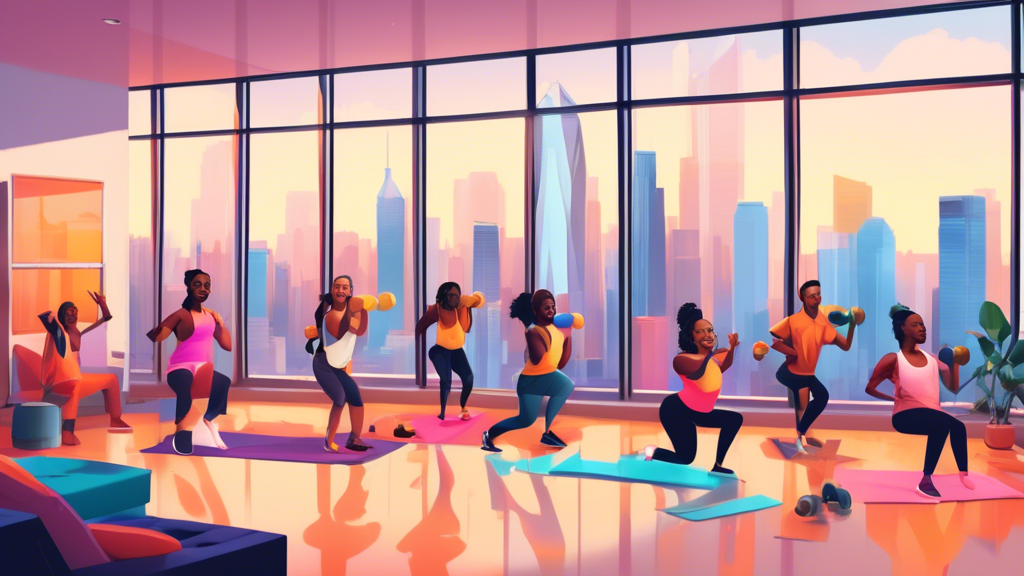
A diverse group of people smiling and doing a variety of no-equipment exercises in a living room with an Atlanta skyline visible through the window.

The most effective home workout program costs nothing. No dumbbells, no resistance bands, no pull-up bar — just your bodyweight, some floor space, and a structured approach. This guide gives you a complete no-equipment training system: a weekly schedule, specific workouts by goal, and the progressions that make bodyweight training as effective as the gym long-term.

Why No-Equipment Training Works

Your muscles don’t know whether they’re lifting a barbell or your body. They respond to tension, time under tension, and progressive overload — all of which are achievable with bodyweight movements. The limitation of bodyweight training isn’t effectiveness; it’s that beginners plateau quickly if they never increase the difficulty. This guide addresses that directly.

The Four Foundational Movements

Every no-equipment program worth following builds around these four movement patterns:

  • Push: Push-ups and their variations (incline, decline, wide, narrow, pike)
  • Pull: Door-frame rows, towel rows, or anything that involves pulling your body toward a fixed point
  • Squat: Air squat, Bulgarian split squat, single-leg squat progressions
  • Hinge: Single-leg Romanian deadlift, good mornings, hip thrusts

These four patterns train every major muscle group. If your program includes all four, you have a complete training stimulus.

A Complete No-Equipment Weekly Schedule

Option A: 3 Days Per Week (Full-Body)

Train Monday, Wednesday, Friday. Each session covers all four movement patterns.

Session structure:

  • 5-minute warm-up: arm circles, leg swings, hip circles, slow marching
  • Push: Push-ups — 3 sets × 10–15 reps
  • Pull: Door-frame row or towel row — 3 sets × 8–12 reps
  • Squat: Bodyweight squat — 3 sets × 15–20 reps
  • Hinge: Single-leg hip thrust — 3 sets × 10 each side
  • Core: Plank — 3 sets × 20–45 seconds
  • 5-minute cool-down: static stretches for the muscles trained

Option B: 4 Days Per Week (Upper/Lower Split)

Train Monday/Thursday (upper body), Tuesday/Friday (lower body).

Upper body days:

  • Push-ups: 4 × 10–15
  • Pike push-ups: 3 × 8–10
  • Door-frame rows: 4 × 10–12
  • Tricep dips (using a chair): 3 × 12
  • Plank: 3 × 30–45 seconds

Lower body days:

  • Bodyweight squat: 4 × 15–20
  • Reverse lunges: 3 × 12 each leg
  • Single-leg hip thrust: 3 × 12 each side
  • Step-ups (using a stair or box): 3 × 12 each leg
  • Calf raises: 3 × 20

How to Make It Harder Over Time

Progressive overload without equipment means changing variables other than weight. Progression options:

  • Reps: Add 2 reps per set each week until you hit the upper end of your rep range
  • Harder variation: Incline push-up → standard → decline → archer → pseudo-planche
  • Tempo: Slow the lowering phase to 3–4 seconds to increase time under tension
  • Reduced rest: Cut rest by 10 seconds between sets as fitness improves
  • Single-limb work: Two-leg squat → Bulgarian split squat → pistol squat

The Door-Frame Row: Your No-Equipment Pull Exercise

The biggest gap in most no-equipment programs is horizontal pulling — there’s nothing to pull toward. The door-frame row solves this without any equipment:

  1. Stand in a doorway and grip both sides of the frame at about hip height
  2. Walk your feet forward until your body is at roughly 45 degrees — the lower, the harder
  3. Hang with straight arms, then pull your chest toward the door
  4. Lower with control

This is a legitimate back exercise. Progress it by walking your feet further forward (increasing the angle) or by slowing the eccentric (lowering) phase.

No-Equipment Cardio Options

For cardiovascular work without equipment, these are the most effective options:

  • Jumping jacks: Simple, effective, low injury risk
  • High knees: Higher intensity than jacks; engages hip flexors and core
  • Mountain climbers: Combines cardio and core
  • Burpees: High effort, full-body — appropriate once you’re comfortable with the components
  • Walking/running: The simplest form of cardio; free, scalable, always available

Realistic Expectations

With consistent no-equipment training, beginners can expect significant strength and fitness gains in the first 3–6 months. The exercises will become noticeably easier, and you’ll need to actively progress them to keep making gains.

The ceiling for no-equipment training is higher than most people think. Many athletes maintain excellent physiques and performance levels using only bodyweight work. But there is a ceiling — specifically for adding significant muscle mass above beginner level, adding external load (weights) eventually becomes necessary. For general fitness, health, and a capable body, bodyweight training is sufficient indefinitely.