The triceps make up roughly two-thirds of your upper arm. If you want arms that look and feel strong, you need to train them directly — and you don’t need a single piece of equipment to do it effectively. Bodyweight tricep training is underused and underestimated. Here’s a complete guide to the best no-equipment tricep exercises, with the coaching cues that turn average results into real ones.
Understanding the Triceps
The triceps brachii has three heads: the long head (runs along the back of the upper arm, largest head — best trained with arms overhead), the lateral head (outside of the arm — prominent when arms are at the sides), and the medial head (underneath, active in nearly all tricep movements). A complete tricep routine includes exercises that target all three — and the exercises below cover each.
The Best No-Equipment Tricep Exercises
1. Close-Grip Push-Up
Hands slightly narrower than shoulder-width. As you lower, elbows track backward along your sides — not flaring outward.
Coaching cue: Think “elbows graze your ribs” on the way down. The moment your elbows flare wide, the load shifts to your chest and shoulders. Hands close + elbows back = triceps do the work.
Muscles targeted: Tricep lateral and medial heads, chest (secondary)
Progression: Start from knees if needed. Build from 3 × 8 to 3 × 15, then elevate feet on a chair.
2. Diamond Push-Up
Hands together beneath your chest, thumbs and index fingers touching to form a diamond. Lower and press, keeping elbows pointing backward.
Coaching cue: This variation places more load on the triceps than any other push-up. The trade-off is it also stresses the wrists — if wrists ache, use the close-grip push-up instead and build wrist strength gradually.
Muscles targeted: Tricep lateral and medial heads (very high), chest (secondary)
Progression: 3 × 8 → 3 × 12 → slow lower (5 seconds) → feet elevated.
3. Chair Dip (Tricep Dip)
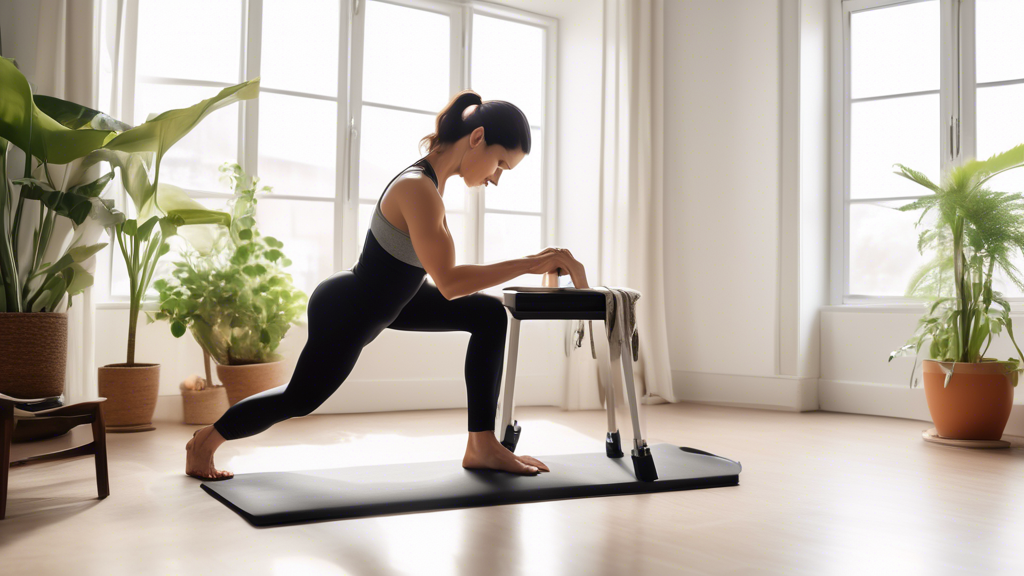
Hands on the seat of a sturdy chair, fingers pointing forward, arms straight. Lower yourself by bending elbows until upper arms are parallel to the floor, then press back up.
Coaching cue: Hips stay close to the chair throughout — sliding forward shifts the load off triceps and onto your shoulders, which can cause impingement. Focus on keeping your torso vertical as you lower. Elbows bend backward, not out to the sides.
Muscles targeted: Tricep all three heads, anterior deltoid (secondary)
Progression: Straight legs (easier) → feet elevated on second chair (harder). 3 × 10 → 3 × 15 → add a backpack with books for load.
4. Pike Push-Up (Overhead Tricep Load)
Start in a downward dog position — hips high, hands and feet on the floor, creating an inverted V. Bend elbows and lower the top of your head toward the floor between your hands. Press back up.
Coaching cue: This exercise targets the tricep long head (the one that activates most when arms are overhead) along with shoulders. Keep your core braced — don’t let your lower back arch as you lower. Head lowers between your hands, not toward your hands.
Muscles targeted: Tricep long head, anterior and medial deltoid
Progression: 3 × 8 pike push-ups → elevate feet on a chair → progress toward wall handstand push-ups.
5. Tricep Push-Up (Wide to Narrow)
Begin in a wide push-up position. As you lower, walk both hands inward to create a narrow grip position, then press up from the narrow position. Walk hands back out for the next rep.
Coaching cue: This moving push-up variation dynamically changes the muscle emphasis — great for variety and preventing adaptation plateaus. Go slow; the transition between positions is where form usually breaks down.
Progression: 3 × 8 slow reps. Rest 60–90 seconds between sets.
6. Bench / Floor Skull Crusher (No Weights Version)
Lie on your back on the floor. Place hands on the floor beside your head with elbows pointing straight up (not flaring). Push the floor away to extend your arms overhead. Lower back slowly.
Coaching cue: This movement mimics a dumbbell skull crusher using just your bodyweight and the floor as resistance. The range of motion is limited but the tricep stretch at the bottom is excellent. Keep elbows pointing straight up — any flaring removes the tricep challenge.
Progression: 3 × 12. Move to incline version (head higher than feet) using a couch to increase range of motion.
7. Tricep Pushdown (Using a Door Frame)
Stand facing a door frame. Place both hands on the frame at shoulder height. Keeping elbows at your sides and upper arms fixed, push down on the frame until arms are straight. Release slowly.
Coaching cue: This improvised pushdown works best if you angle slightly away from the door frame to increase resistance. The key is fixing the upper arms in place — only forearms move, just like a cable pushdown at a gym.
Progression: Use a resistance band looped over the door frame for a proper pushdown that allows progressive overload.
Sample No-Equipment Tricep Workout
| Exercise | Sets | Reps | Rest |
|---|---|---|---|
| Close-Grip Push-Up | 3 | 12 | 45 sec |
| Chair Dip | 3 | 10 | 60 sec |
| Pike Push-Up | 3 | 8 | 60 sec |
| Diamond Push-Up | 3 | 8 | 60 sec |
| Floor Skull Crusher | 3 | 12 | 45 sec |
Run this workout 2–3 times per week. Allow 48 hours between tricep sessions for recovery.
Progression Timeline
| Milestone | Target |
|---|---|
| Week 2–3 | Complete all sets without form breakdown on close-grip push-ups and dips |
| Week 4–6 | Add slow eccentric (3-second lower) to push-ups and dips |
| Week 6–8 | Add pike push-ups and feet-elevated dips |
| Week 8+ | Add a resistance band for banded dips or overhead extensions for additional progressive overload |
Common Mistakes That Limit Tricep Development
- Flaring elbows during push-ups: Wide elbows = chest exercise. Elbows tracking back = tricep exercise. This single cue changes the entire effect of the movement.
- Stopping at parallel on dips: Partial range of motion means partial muscle development. Lower until your upper arm is roughly parallel to the floor — if you can’t, build strength gradually.
- Only doing push-ups: Push-ups are great but they primarily target the medial and lateral tricep heads. Include overhead movements (pike push-ups, overhead extensions) to develop the long head, which gives the arm that thick, rounded look.
Looking to add resistance band exercises to your tricep routine? Our Exercise Substitute Finder can show you band-based alternatives to any of these movements.
References
- American Council on Exercise. “ACE Study Reveals Best and Worst Triceps Exercises.” ACE Fitness, 2012.
- Schoenfeld BJ. “The mechanisms of muscle hypertrophy and their application to resistance training.” Journal of Strength and Conditioning Research, 24(10): 2857–2872, 2010.
Free tools to put this into practice
Build a full program around your goal, or plan the gear to support it — both are free and need no sign-up.
AI Workout Plan Builder
Home Gym Equipment Advisor
See all tools →

Written by
Simple Home Workout Editorial Team
Articles are written and edited by the Simple Home Workout editorial team. Content is researched using established exercise and fitness guidance and edited for clarity, practicality, and home-workout use. This is general educational information, not personalized medical, dietetic, or fitness advice.
View all posts →