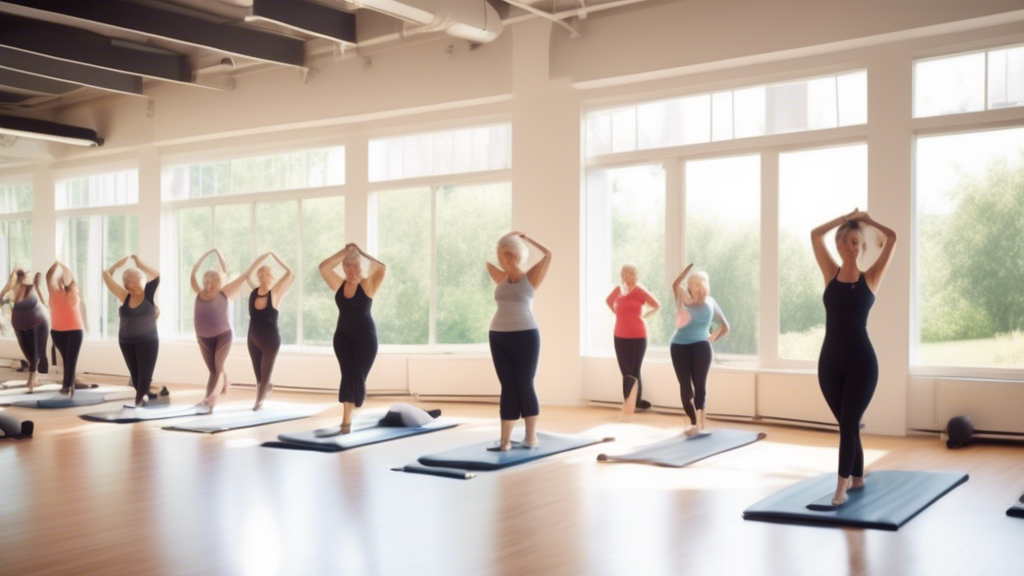
Pilates core training works differently from standard ab exercises. Rather than isolating specific muscles through flexion (like crunches), Pilates prioritizes deep stabilization, control under load, and coordination between breath and movement. Understanding what each exercise is actually training helps you do it correctly and explains why the results transfer to everything else you do physically.
The Core in Pilates: Deeper Than “Abs”
Pilates targets the “powerhouse” — what modern anatomy calls the deep core system: the transverse abdominis (deepest ab layer), pelvic floor, diaphragm, and multifidus (deep spinal stabilizers). These muscles work together to create intra-abdominal pressure that protects the spine. Strengthening them improves posture, reduces back pain, and makes every movement more efficient.
Exercise 1: The Hundred
What it trains: Core endurance and breath coordination
Lie on your back, curl head and shoulders off the mat, extend legs at 45° (or keep knees bent for beginners). Arms by your sides, pump them up and down in small pulses — 5 pumps inhale, 5 pumps exhale. Complete 10 breath cycles = 100 pumps.
The sustained hold demands constant deep core engagement. The breathing pattern coordinates the diaphragm and pelvic floor — the “top and bottom” of the core cylinder.
Exercise 2: The Roll-Up
What it trains: Spinal articulation and sequential core activation
Lie flat with arms overhead. Slowly curl up vertebra by vertebra, reaching forward over your legs, then reverse back down with the same control. Do not use momentum. Each vertebra should peel off and return to the mat sequentially.
This reveals and addresses spinal mobility restrictions — segments that “clunk” rather than roll are areas of stiffness or weakness. 3 × 5 reps.
Exercise 3: Single-Leg Stretch
What it trains: Anti-rotation stability and hip flexor strength
Lie on your back, curl up, pull one knee to chest while the other leg extends. Alternate legs in a coordinated rhythm while maintaining a still, curled torso. Your core stabilizes the pelvis as the legs create rotational forces that want to pull it off-center.
3 × 10 alternating reps.
Exercise 4: Plank (Pilates Version)
What it trains: Whole-core anti-extension with neutral spine
The Pilates plank differs from a standard plank in emphasis: neutral spine (no tucked pelvis), ribcage drawn down (not flared), and active shoulder stabilization. Hold for 20–30 sec, 3 sets. Your focus is on the quality of engagement, not the duration.
Exercise 5: Leg Circles
What it trains: Pelvis stabilization during limb movement
Lie on your back with one leg extended to the ceiling. Circle the leg in small, controlled circles — the pelvis must stay completely still while the leg moves. This isolates the hip socket movement from the pelvis and trains the deep hip stabilizers. 5 circles each direction per leg, 2 sets.
Exercise 6: Criss-Cross
What it trains: Obliques with rotational control
Like a bicycle crunch but with full shoulder rotation and a 1-second pause at the top of each rotation. Bring one elbow toward the opposite knee while extending the other leg. The key is rotating from your thoracic spine, not just swinging your elbow. 3 × 8 per side.
A Beginner Pilates Core Session (30 Minutes)
- Breathing practice (diaphragmatic) — 2 min
- The Hundred — 3 rounds (aim for 50–100 pumps)
- Roll-Up — 3 × 5
- Single-Leg Stretch — 3 × 10
- Pilates Plank — 3 × 20 sec
- Leg Circles — 2 × 5 per direction, per leg
- Criss-Cross — 3 × 8 per side
Practice 3× per week. The learning curve is in the quality of movement — these exercises become more effective as your body awareness improves.
Free tools to put this into practice
Build a full program around your goal, or plan the gear to support it — both are free and need no sign-up.
AI Workout Plan Builder
Home Gym Equipment Advisor
See all tools →

Written by
Simple Home Workout Editorial Team
Articles are written and edited by the Simple Home Workout editorial team. Content is researched using established exercise and fitness guidance and edited for clarity, practicality, and home-workout use. This is general educational information, not personalized medical, dietetic, or fitness advice.
View all posts →