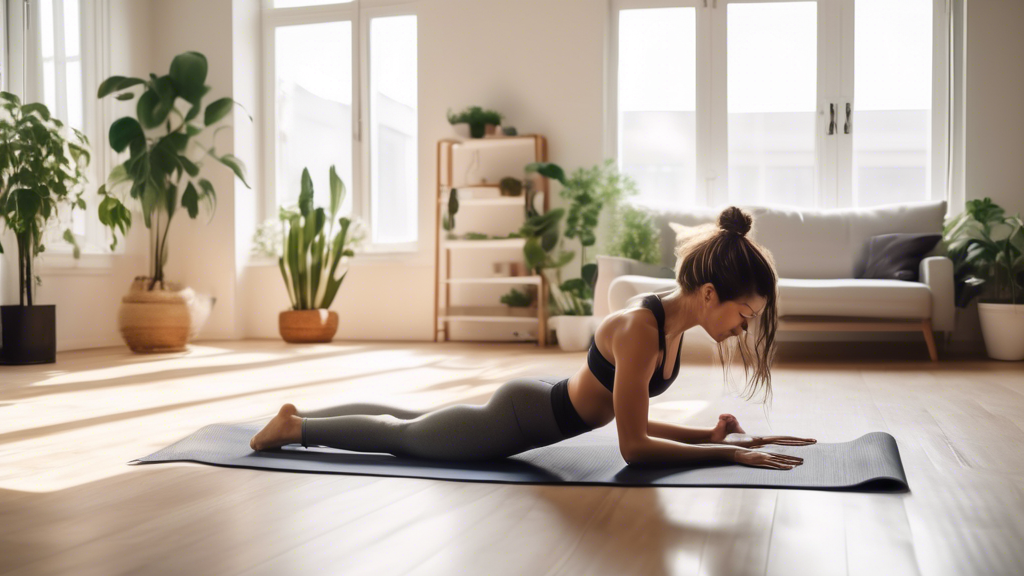
Training in an apartment has one constraint that standard home workout guides don’t address: impact travels through floors. Jump squats, burpees with jumps, and jumping jacks create noise that reaches neighbors below more than most people expect. This guide gives you a full-body bodyweight workout built specifically around that constraint — effective training that doesn’t require noise management.
The Core Principles
No jumping in the main sessions. Jump-based exercises are replaced with low-impact equivalents that produce similar training effects without floor impact.
Slow eccentrics are quiet and harder. Lowering slowly — 3 to 4 seconds on the way down — increases time under tension significantly. A slow-lowering squat is harder than a standard squat and completely silent. This is the primary tool for increasing intensity without adding impact.
Floor exercises are the quietest option. Push-ups, planks, glute bridges, and other mat-based movements produce essentially no floor noise. When you need complete quiet — late at night, early morning — shift toward floor-only variations.
The Complete Apartment Workout
3 rounds, 45 seconds rest between rounds. Takes 25 to 30 minutes.
Lower Body
Slow squat (3-second lower) — 12 reps
Take 3 full seconds to lower, then stand back up at normal speed. The slow eccentric loads the quads and glutes more effectively than a standard squat. No impact, no noise.
Reverse lunge — 10 reps per side
Step backward rather than forward. More space-efficient, less forward instability. Both knees reach 90 degrees at the bottom.
Glute bridge — 15 reps
Lie on back, drive hips up through your heels. Single-leg version for more difficulty. Entirely floor-based and silent.
Wall sit — 45 seconds
Slide down a wall until thighs are parallel to the floor. Static hold. Completely quiet, high quad demand, requires no movement at all.
Single-leg calf raise — 15 reps per side
Hold a wall for balance. Lower slowly — 2 to 3 seconds down.
Upper Body
Push-up — 12 reps
Standard or with variations: wide-grip emphasizes chest, close-grip emphasizes triceps, pike push-up targets shoulders. The most versatile quiet upper body exercise.
Tricep dip — 12 reps
Use a sturdy chair. Hands on seat edge, feet extended or bent, bend elbows to lower, press up.
Pike push-up — 8 reps
Hips high in an inverted V, lower your head toward the floor between your hands, press back up. More shoulder emphasis than a standard push-up.
Table row — 10 reps
Lie under a sturdy table, grip the edge, pull your chest toward the underside. Keep your body straight. Effective back and bicep exercise using only furniture.
Core
Plank hold — 30 to 45 seconds
Forearms or hands. No impact, no sound. The best core-to-noise ratio of any exercise.
Dead bug — 8 reps per side
Lie on back. Extend opposite arm and leg while pressing your lower back into the mat. Works deep stabilizers.
Glute bridge with march — 12 reps
Hold the top of a glute bridge, lift one foot a small amount off the floor, alternate. Adds anti-rotation demand.
Low-Impact Cardio for Apartments
Cardiovascular work without jumping requires some creativity:
- High knee march: Lift knees to hip height vigorously. Controlled and quiet but genuinely elevates heart rate with sustained effort.
- Shadow boxing: Jab, cross, hook, uppercut combinations. Gets heart rate up with zero floor impact. Add movement and pivoting for more intensity.
- Step-ups: Step up onto a bottom stair or a low, sturdy box. Alternate legs for 60 seconds. Step rather than jump for low noise.
- Squat-to-stand circuit: String slow squats, standing oblique crunches, and hip hinges together continuously for 20 minutes. More cardio effect than it sounds.
Timing Considerations
Even low-impact exercises produce some foot-strike and movement noise. Most building quiet-hours rules cover 10 PM to 7 or 8 AM. If your schedule requires late-night training, the floor exercises — planks, push-ups, glute bridges, dead bugs — produce essentially no sound and are your best options during those hours. Save the squat and lunge variations for daytime sessions.
Free tools to put this into practice
Build a full program around your goal, or plan the gear to support it — both are free and need no sign-up.
AI Workout Plan Builder
Home Gym Equipment Advisor
See all tools →

Written by
Simple Home Workout Editorial Team
Articles are written and edited by the Simple Home Workout editorial team. Content is researched using established exercise and fitness guidance and edited for clarity, practicality, and home-workout use. This is general educational information, not personalized medical, dietetic, or fitness advice.
View all posts →