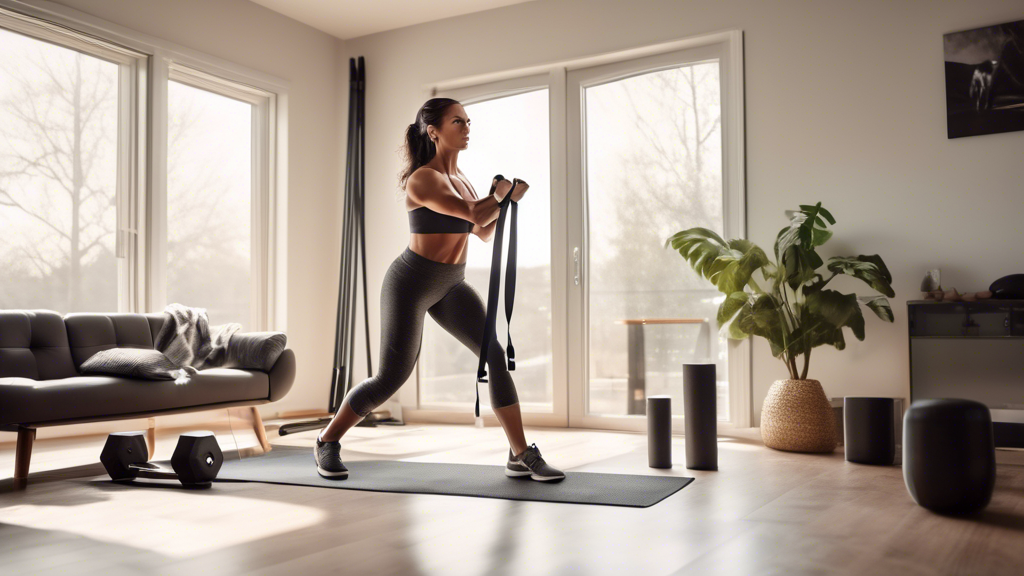
Biceps and triceps make up most of your upper arm. Training both equally is what creates the “full arm” look — and both can be developed significantly at home. This guide covers the best exercises for each muscle, how to train them without weights, and how to build a program that makes them grow.
The Triceps: 3 Heads, One Goal
Your triceps have three heads (long, medial, lateral) and make up roughly two-thirds of your upper arm. Most people undertrain them relative to biceps. Every pushing exercise you do works triceps — so if your pushing volume is high, your triceps are already getting significant stimulus.
Best Tricep Exercises at Home
Diamond Push-Up — 3 × 8–10
Hands close under chest in a diamond shape. Most effective bodyweight tricep exercise. Keep elbows pointing back, not flaring out.
Tricep Dip — 3 × 10–12
Hands on a sturdy chair, legs extended. Lower until elbows reach 90°. Progress by elevating feet on a second chair.
Close-Grip Push-Up — 3 × 10
Hands shoulder-width (narrower than standard). Elbows stay close to your ribs throughout. One of the best overall tricep builders in bodyweight training.
Overhead Tricep Extension (with household object) — 3 × 12
Hold a filled water jug or heavy book behind your head with both hands. Extend overhead by straightening your elbows, keeping upper arms stationary.
The Biceps: Training Them Without a Barbell
Biceps are primarily trained through pulling and curling movements. Without a barbell or dumbbells, you need to be creative — but the load is there if you look for it.
Best Bicep Exercises at Home
Table Row — 3 × 10–12
Lie under a sturdy table, grip the edge, pull your chest to the surface. Your biceps do significant work here alongside your back. The best bicep exercise you can do without any equipment at all.
Towel Row — 3 × 10
Loop a towel around a door handle, lean back, and pull your chest toward the anchor. Adjust body angle to control difficulty.
Filled Backpack Curl — 3 × 12
Load a backpack with books to your desired weight. Hold by the top handle and curl. This is a legitimate bicep curl — the load is real regardless of the vessel.
Water Jug Hammer Curl — 3 × 12
Hold a filled gallon jug (about 8.5 lbs) with a neutral grip (thumb pointing up) and curl. Targets the brachialis — the muscle underneath the bicep that pushes it up and makes arms look thicker.
The 3-Day Arm Program
Train arms 3× per week. Combine both muscle groups in each session.
Session A (Monday): Diamond push-up 3×10 → Table row 3×10 → Tricep dip 3×10 → Backpack curl 3×12
Session B (Wednesday): Close-grip push-up 3×10 → Towel row 3×10 → Overhead extension 3×12 → Hammer curl 3×12
Session C (Friday): Repeat Session A with +1 rep per set on each exercise
Progressive Overload Without a Weight Room
The single biggest factor in arm growth is making the work progressively harder. Options:
- Add weight to the backpack
- Increase filled jug size
- Move to harder exercise variations (close-grip → diamond → archer push-up)
- Reduce rest periods by 10 seconds per week
- Add a 3-second lowering phase (eccentric) to every rep
How Long Until You See Results
Strength improvements: 2–3 weeks. Visible muscle changes: 6–8 weeks of consistent training with adequate protein intake (0.7–1g per pound of bodyweight daily). The timeline is the same whether you train at home or in a gym — it’s determined by consistency and progressive overload, not the equipment.
Free tools to put this into practice
Build a full program around your goal, or plan the gear to support it — both are free and need no sign-up.
AI Workout Plan Builder
Home Gym Equipment Advisor
See all tools →

Written by
Simple Home Workout Editorial Team
Articles are written and edited by the Simple Home Workout editorial team. Content is researched using established exercise and fitness guidance and edited for clarity, practicality, and home-workout use. This is general educational information, not personalized medical, dietetic, or fitness advice.
View all posts →