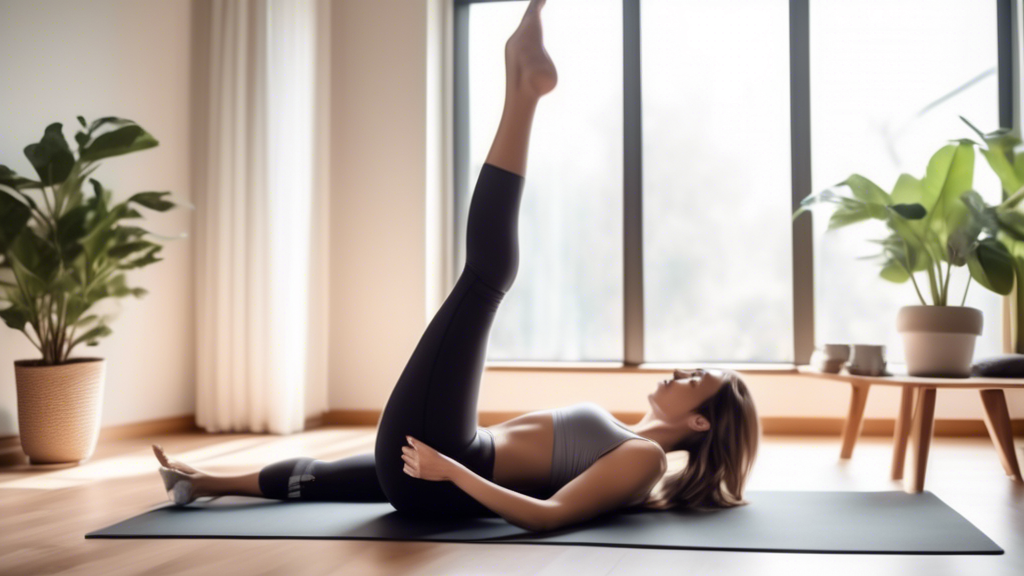
The inner thigh muscles — your adductors — pull your legs toward the midline of your body. They’re involved in walking, running, squatting, and most lower body movements, but rarely get direct training in general fitness programs.
The exercises below target them specifically. Some require no equipment at all. A resistance band ($10 to $15) expands your options. None require gym machines.
A Brief Anatomy Note
The adductor group includes five muscles: adductor magnus, adductor longus, adductor brevis, pectineus, and gracilis. The adductor magnus is the largest and most powerful — it also assists the hamstrings in hip extension. The exercises below create meaningful tension across this whole group, particularly when the hip is in different positions of flexion and extension.
The 6 Exercises
1. Sumo Squat
Stand with feet significantly wider than shoulder-width, toes turned out 30 to 45 degrees. Squat down, keeping knees tracking over toes throughout. The wide stance and external hip rotation increase adductor demand compared to a standard squat.
Sets and reps: 3 sets of 15
Progression: Pause 3 seconds at the bottom, or hold a weight at your chest. A filled backpack or water jug works.
2. Side-Lying Hip Adduction
Lie on your side. Cross the top leg in front of you, foot flat on the floor for stability. The bottom leg is straight. Lift the bottom leg upward as high as you comfortably can, lower slowly. This directly isolates the adductors with minimal involvement from other muscles.
Sets and reps: 3 sets of 15 per side
Progression: An ankle weight of 2 to 3 lbs makes this substantially harder.
3. Copenhagen Plank
This is the most effective adductor exercise without a gym machine, but it requires a surface — a couch, low coffee table, or sturdy ottoman. Set up in a side plank. Place your top foot on the surface. Lift your bottom leg up toward it and hold. The adductor of the top leg works isometrically to press down into the surface.
Sets and reps: 3 sets of 20 to 30 seconds per side
Progression: Lift and lower the bottom leg in a small controlled range rather than holding static.
4. Lateral Lunge
Stand with feet together. Step directly to the right, keeping your left leg straight. Sink into the right hip, driving it back. The adductors of the straight left leg work eccentrically to control the lateral movement. Return to standing and repeat.
Sets and reps: 3 sets of 12 per side
Progression: Add a weight held at chest level.
5. Resistance Band Adduction
Attach a resistance band to a fixed point at ankle height — a table leg or door anchor. Loop the band around one ankle. Stand perpendicular to the anchor and step away to create tension. Pull your anchored leg across your body, return with control. This closely mimics a cable hip adduction machine.
Sets and reps: 3 sets of 15 per side
Equipment needed: A mini resistance band or loop band, approximately $10 to $15
6. Plie Squat Pulse
Wide-stance squat with feet turned out 45 to 60 degrees. Sink to the bottom position. From there, pulse a few inches up and down, staying in the range of motion where the adductors are under constant tension. Unlike a full range squat, you never reach the top where tension releases.
Sets and reps: 3 sets of 30 seconds
Progression: Add a held weight at chest level.
What Won’t Work for Inner Thighs
The inner thigh squeeze machine (hip adduction machine) at a gym is effective. The closest home bodyweight equivalent is the Copenhagen plank. Many online “inner thigh exercises” — certain leg raises and floor movements — target the hip flexors more than the adductors. The six exercises above are selected specifically because they create genuine load on the adductor group through a meaningful range.
Training Frequency
Two to three times per week. Include adductor work at the end of a lower body session or as part of a hip stability and mobility routine. They recover quickly relative to larger leg muscles and respond well to moderate volume rather than heavy loads.
Free tools to put this into practice
Build a full program around your goal, or plan the gear to support it — both are free and need no sign-up.
AI Workout Plan Builder
Home Gym Equipment Advisor
See all tools →

Written by
Simple Home Workout Editorial Team
Articles are written and edited by the Simple Home Workout editorial team. Content is researched using established exercise and fitness guidance and edited for clarity, practicality, and home-workout use. This is general educational information, not personalized medical, dietetic, or fitness advice.
View all posts →