No-Equipment Workout for Small Rooms: 12 Exercises in a 4×4 Foot Space

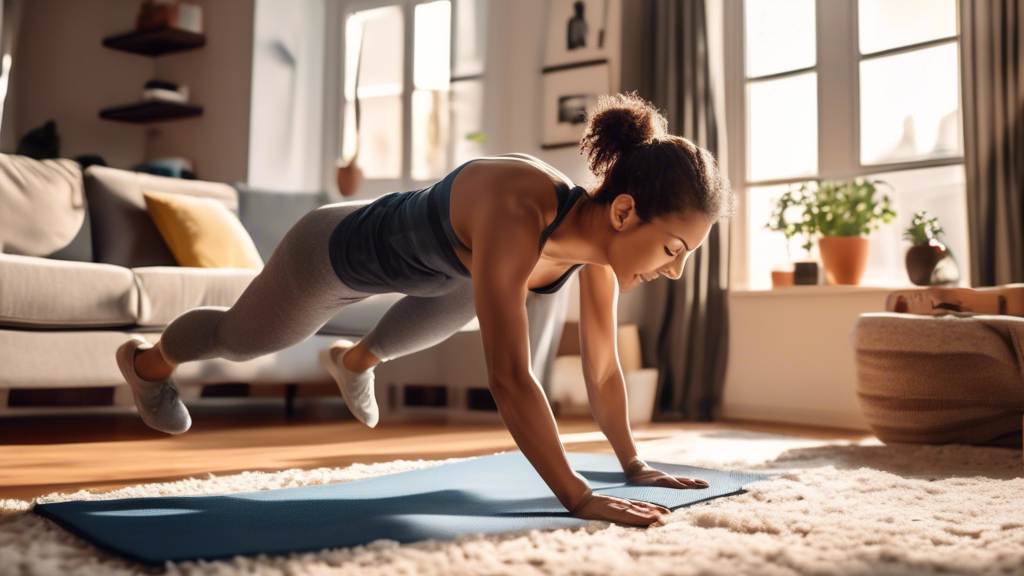
A cozy, minimalist room with a person performing a bodyweight exercise like yoga or push-ups on a mat, surrounded by simple, space-saving furniture and ser

A yoga mat is 6 by 2 feet. The exercises below fit in that space or smaller. They’re designed for hotel rooms, dorm rooms, studio apartments, or any situation where the available floor space is genuinely limited and rearranging furniture isn’t an option.

These aren’t the exercises with the highest calorie burn per minute — that would be burpees and jumping jacks. These are the most effective exercises relative to the floor space they occupy.

6 Standing Exercises (No Extra Floor Space Required)

1. Wall Push-Up

Targets: Chest, shoulders, triceps
Stand an arm’s length from a wall. Place hands shoulder-width apart. Lower your chest toward the wall, press back. Good starting exercise or warm-up for harder push-up variations.
3 sets of 15 to 20 reps. Progress to incline push-up (hands on chair), then floor push-up.

2. Bodyweight Squat

Targets: Quads, glutes, hamstrings
Feet shoulder-width, toes slightly out. Sit back and down, knees tracking over toes. Stand through your heels.
3 sets of 15 to 20 reps. Progress to pause squat (3 seconds at bottom), then single-leg squat.

3. Standing Hip Hinge

Targets: Hamstrings, glutes, lower back
Stand hip-width. Push your hips back while keeping your back flat, as if trying to touch the wall behind you with your tailbone. Return to standing by driving hips forward.
3 sets of 12 reps. Progress to single-leg hinge.

4. Calf Raise

Targets: Calves, ankle stability
Stand near a wall for balance. Rise onto your toes slowly, lower slowly. The slow lowering phase is where most of the work happens.
3 sets of 20 reps. Progress to single-leg calf raise.

5. Standing Oblique Crunch

Targets: Obliques, lateral core
Stand feet hip-width. Raise one knee while lowering the same-side elbow toward it. Alternate sides with control.
3 sets of 15 per side. Progress by adding a small weight — a full water bottle works.

6. High Knee March

Targets: Hip flexors, cardiovascular conditioning (low impact)
Lift each knee to hip height, alternating. March in place at a pace that raises your heart rate. This is the quietest cardio option available.
3 sets of 60 seconds.

6 Floor Exercises (Fit Within a Yoga Mat)

7. Push-Up

Targets: Chest, triceps, shoulders, core
Body straight, hands slightly wider than shoulder-width. Lower until chest nearly touches floor, press back up.
3 sets of 8 to 12 reps. Progress to close-grip, then explosive push-up.

8. Plank

Targets: Core, shoulders, stability
Forearms or hands. Body straight from head to heels. Don’t let hips sag or pike.
3 sets of 20 to 45 seconds. Progress to plank shoulder tap, plank with leg lift.

9. Glute Bridge

Targets: Glutes, hamstrings, lower back
On your back, knees bent, feet flat. Drive hips up, squeeze at top, lower slowly.
3 sets of 15 reps. Progress to single-leg glute bridge.

10. Superman Hold

Targets: Lower back, glutes, rear shoulders
Lie face down. Lift arms, chest, and legs simultaneously. Hold 3 seconds.
3 sets of 10 reps. Progress to alternating arm and opposite leg.

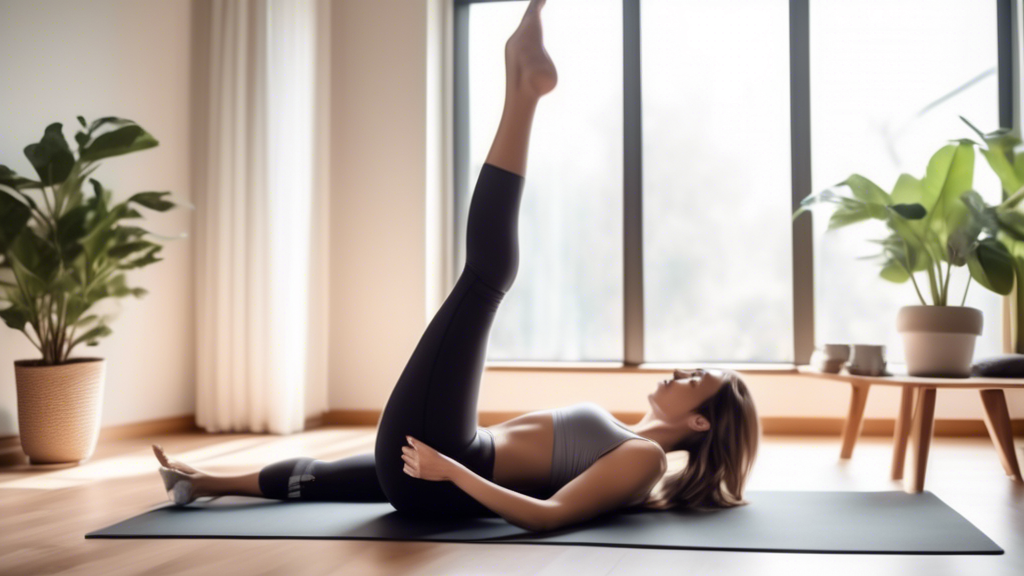
11. Lying Leg Raise

Targets: Lower abs, hip flexors
On your back, legs straight. Lower them toward (but not touching) the floor, raise back up. Press your lower back into the mat throughout.
3 sets of 12 reps. Progress to flutter kick, then scissor kick.

12. Side-Lying Hip Abduction

Targets: Outer glutes (gluteus medius), hip stability
Lie on your side, legs stacked. Lift the top leg to about 45 degrees, lower with control. Don’t let it drop.
3 sets of 15 per side. Progress by adding ankle weight or a resistance band above the knee.

Building a 20-Minute Circuit

Choose 6 to 8 exercises and do them as a circuit — one set of each exercise in sequence, then rest 60 seconds, repeat 3 times.

Example circuit for 20 minutes:

  • Squat: 15 reps
  • Push-up: 10 reps
  • Glute bridge: 15 reps
  • Plank: 30 seconds
  • High knee march: 45 seconds
  • Superman hold: 10 reps
  • Lying leg raise: 12 reps

Repeat 3 times with 60 seconds rest between rounds.

When Space Is Even More Limited

If your available strip of floor is narrower than a yoga mat — a 3-foot corridor beside a bed, for example — limit yourself to the 6 standing exercises. Wall push-ups, squats, hip hinges, calf raises, standing oblique crunches, and high knee marches all work in that space without requiring you to move anything.
Pilates Core Workout: A Complete 30-Minute Session With Form Cues

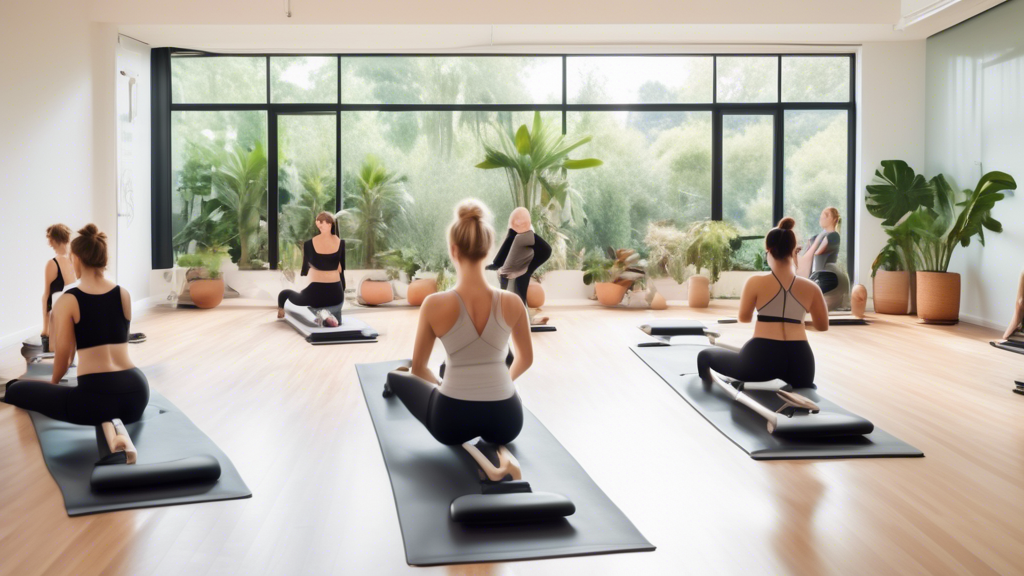
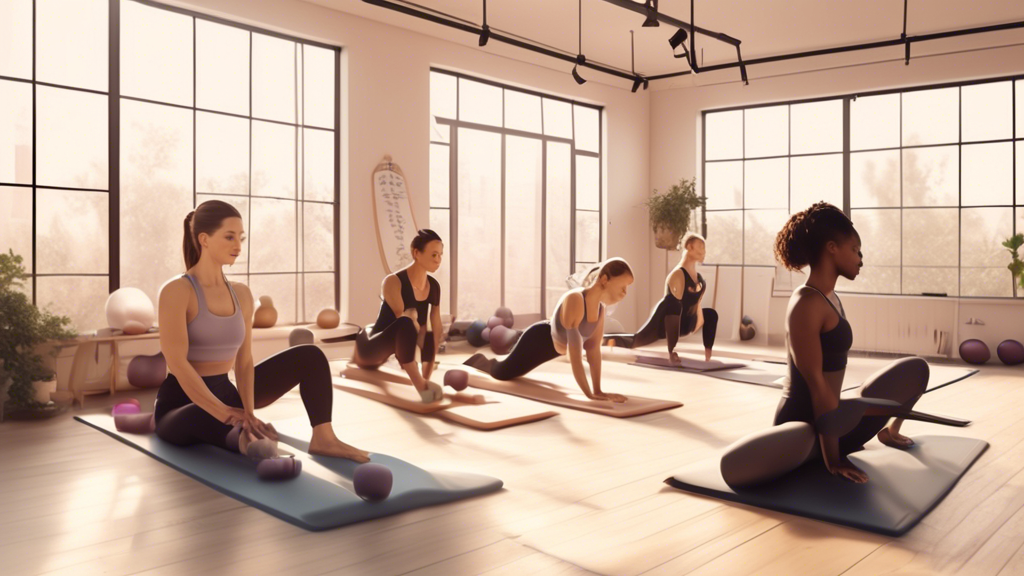
A serene studio with large windows letting in natural light, showcasing a group of diverse individuals engaged in a Pilates core workout on mats. They are

This is a complete Pilates core session structured as a workout — warm-up, eight exercises with specific form cues, and cool-down. It takes about 30 minutes if you follow the rest periods.

You need a mat. The session is suitable for beginners comfortable lying on the floor and for intermediate exercisers who want a focused core session. No Pilates background required.

The Key Concept: What Pilates Actually Targets

Most ab exercises — crunches, sit-ups, leg raises — work the rectus abdominis, the outermost abdominal layer. Pilates targets the transverse abdominis (deep inner abs), multifidus (deep spinal stabilizers), and pelvic floor. These muscles stabilize the spine before movement happens, which is why Pilates produces a different quality of core strength than conventional ab training.

Before each exercise, practice this: exhale and gently draw your lower belly in and up — about 30% effort, not a hard vacuum. This activates the transverse abdominis. Hold this engagement throughout each movement.

Warm-Up (5 Minutes)

Cat-cow — 10 reps. On hands and knees. Inhale, drop the belly and lift the chest (cow). Exhale, round the spine toward the ceiling (cat). Move slowly through each vertebra.

Pelvic tilt — 10 reps. Lie on your back, knees bent. Exhale and press your lower back gently into the mat, then inhale and release to neutral. This small movement teaches you what neutral spine feels like.

Child’s pose with reach — 30 seconds. Sit back onto heels, reach arms forward on the mat. Breathe into your lower back.

The Eight Exercises

1. The Hundred

Targets deep core, hip flexors, and breathing coordination.
Lie on your back. Curl head and shoulders up. Extend legs to 45 degrees — raise them higher if your lower back arches off the mat. Arms reach long beside your hips, pump them vigorously up and down. Inhale for 5 pumps, exhale for 5. Complete 100 pumps total.
Form cue: The back staying flat is the priority. Raise legs to 60 or 70 degrees if needed to maintain it.

2. Roll-Up

Targets abdominal flexors and spinal mobility.
Lie flat, arms overhead. Inhale. Exhale and peel your spine off the mat slowly — each vertebra lifts separately, not all at once. Reach toward your feet. Inhale at the top. Exhale to lower back down the same way. 8 reps.
Form cue: This is not a sit-up. If you can’t roll up with control, start with hands behind your knees and assist yourself.

3. Single Leg Stretch

Targets deep abs, hip flexors, coordination.
Curl head and shoulders up. Pull one knee toward your chest, extend the other leg at 45 degrees. One hand on your ankle, one on your knee. Alternate with a rhythmic pull. 10 reps per side.
Form cue: Lower back stays pressed into the mat. If it’s arching, raise the extended leg higher.

4. Double Leg Stretch

Targets core stability and coordination.
Both knees pulled to chest. Curl head and shoulders up. Inhale and extend both arms overhead and both legs to 45 degrees simultaneously. Exhale and circle arms back to hug knees in. 8 reps.
Form cue: The moment you extend is the moment the core must work hardest. Don’t relax it as you reach out.

5. Criss-Cross

Targets obliques and rotational core stability.
Hands behind head. Curl up. Rotate your right shoulder toward your left knee while extending your right leg. Switch sides. 10 reps per side.
Form cue: Rotate from the ribcage, not just the elbow. Think about bringing your armpit toward the opposite knee.

6. Spine Stretch Forward

Targets spinal mobility and hamstring flexibility.
Sit tall with legs extended hip-width apart. Exhale and round your spine forward while keeping your hips grounded. Inhale to sit back up. 8 reps.
Form cue: You’re actively flexing your spine and pulling your belly back toward your spine as you reach forward — not just flopping over.

7. Swan Prep

Targets spinal extensors and rear shoulders — a necessary counterbalance to all the forward flexion above.
Lie face down, hands under shoulders. Inhale. Exhale and press through your hands to lift your chest — elbows remain bent, forearms stay on the mat. Hold 2 seconds, lower. 8 reps.
Form cue: Lead with your sternum, not your chin. Shoulders stay away from your ears.

8. Bird Dog

Targets the multifidus (deep spinal stabilizers) and glutes.
On all fours, hands under shoulders, knees under hips, spine neutral. Exhale and extend your right arm forward while extending your left leg back simultaneously. Hold 3 seconds, return with control. Alternate sides. 10 per side.
Form cue: Keep your hips level — no rotation. A common error is letting the lifted-leg hip drop or rise.

Cool-Down (5 Minutes)

  • Lying knee-to-chest hug: 30 seconds per side
  • Happy baby pose: 30 seconds
  • Savasana, breathing slowly: 2 minutes

How Often to Do This Session

Two to three times per week with at least one rest day between. Pilates core work is recovery-friendly — it doesn’t create the muscle damage that heavy lifting does — but the nervous system benefits from rest between sessions to consolidate movement patterns. It pairs well as a finisher to other workouts or as a standalone active recovery session.

How to Build Forearms at Home: 7 Exercises, Sets, Reps, and No-Equipment Alternatives

A person working out at home using various equipment and bodyweight exercises to build forearm muscles, including dumbbells, resistance bands, and a pull-u

Your forearms are involved in nearly every upper body exercise — pulling, rowing, carrying — but rarely get dedicated training. Building them at home is straightforward: forearm work requires grip, which you can load with household objects, resistance bands, or your own bodyweight. Barbells and cables help but aren’t required.

The seven exercises below cover the main forearm muscle groups: the flexors (underside, responsible for grip closing and wrist flexion), the extensors (topside, responsible for wrist extension), and the brachioradialis (the thick outer muscle that bridges forearm and upper arm).

The 7 Exercises

1. Wrist Curl

Target: Forearm flexors
Sit on a chair. Rest your forearms on your thighs, wrists just beyond your knees, palms up. Hold a household weight — a water bottle, a soup can, a filled bag, or a dumbbell. Curl your wrists up, lower slowly.
Sets and reps: 3 sets of 15 to 20
No-equipment alternative: Use a resistance band looped around your palm, stepping on the other end.

2. Reverse Wrist Curl

Target: Forearm extensors
Same position, but palms face down. Raise the back of your hand toward the ceiling, lower slowly. This side of the forearm is weaker than the flexor side — expect to use less weight.
Sets and reps: 3 sets of 12 to 15

3. Farmer’s Carry

Target: Grip strength, forearm flexors, carrying endurance
Grab two heavy household objects — filled water jugs, paint cans, heavy grocery bags. Walk with them for 30 to 60 seconds while keeping shoulders back and core engaged. No leaning to one side.
Sets: 3 rounds of 30 to 60 seconds
Why this matters: Farmer’s carries train grip endurance — the ability to hold something heavy for time — more specifically than any isolation exercise. Real grip strength is about duration, not just peak force.

4. Towel Hang

Target: Crushing grip strength
Drape a thick towel over a pull-up bar or a secure overhead surface. Grab both ends of the towel and hang from it. The instability of cloth dramatically increases grip demand compared to gripping a rigid bar.
Sets: 3 sets, hang until grip failure
No-bar alternative: Loop a towel over the top of a sturdy door. Hold both sides of the towel, lean back into a supported row position, and hold or row.

5. Towel Pull-Up or Row

Target: Grip and forearm during pulling movements
Same towel setup. Perform a pull-up or row if you’re able. The grip demand is significantly higher than a standard bar because you’re gripping cloth rather than a rigid surface.
Sets and reps: 3 sets of max reps

6. Book Pinch (or Plate Pinch)

Target: Pinch grip strength
Hold a heavy book pinched between your thumb and four fingers, arm at your side. Hold until your grip fails. This trains pinch grip, which is different from the crushing grip used in most other exercises and produces more complete forearm development.
Sets: 3 holds to failure

7. Ball or Putty Squeeze

Target: Forearm flexor endurance
Squeeze a stress ball, tennis ball, or therapy putty (a few dollars at a pharmacy) 30 times per hand. Higher rep range than weight exercises, which builds endurance in the forearm flexors.
Sets and reps: 3 sets of 30 squeezes per hand

A Weekly Forearm Routine

Add forearm work at the end of any upper body session — the forearms are already partially fatigued from pulling movements, so finishing with isolation work is efficient rather than redundant.

Sample 15-minute add-on, 2 to 3 times per week:

  1. Wrist curl — 3 x 15
  2. Reverse wrist curl — 3 x 12
  3. Farmer’s carry — 3 x 45 seconds
  4. Towel hang — 3 x to grip failure
  5. Ball squeeze — 3 x 30 per hand

Realistic Timeline

Forearm muscles are smaller than the major muscle groups and contain a high proportion of slow-twitch endurance fibers. With consistent training 2 to 3 times per week: grip strength improvement is noticeable in 2 to 4 weeks; visible forearm size change takes 8 to 12 weeks. Progress faster by also prioritizing compound pulling movements — rows, pull-ups, deadlifts — which heavily recruit the forearms alongside isolation work.

Best Bodyweight Exercises for Small Spaces: Ranked by Footprint and Effectiveness

Create an image of a person performing various bodyweight exercises in a small, cozy living room. The scene features a comfortable sofa, a coffee table, an

Not all bodyweight exercises fit in small spaces equally. A forward lunge travels more floor space than a reverse lunge. A burpee requires you to go from standing to fully prone and back. Side shuffles need lateral room many rooms don’t have.

This guide ranks exercises by floor footprint and training value so you can build a workout that fits where you actually are.

Zero Extra Footprint — Stand in Place

Bodyweight squat
Footprint: Your standing position
Effectiveness: Very high — quads, hamstrings, glutes, core
One of the best small-space exercises. Scales from beginner (standard squat) to advanced (single-leg squat, jump squat) without moving an inch.

Standing hip hinge
Footprint: Your standing position
Effectiveness: High — hamstrings, glutes, lower back
Essential posterior chain work. Push hips back while keeping back flat, stand back up. Often skipped in home workouts, which leads to quad-dominant imbalances.

Calf raise
Footprint: Your standing position
Effectiveness: Moderate — calves, ankle stability
Hold a wall for balance. Single-leg version doubles the demand.

High knee march
Footprint: Your standing position
Effectiveness: Moderate — hip flexors, low-impact cardiovascular
The best cardio option for very small spaces and apartment situations. No lateral movement, no impact.

Small Footprint — Body Length Only

Push-up
Footprint: Body length, lying down
Effectiveness: Very high — chest, triceps, shoulders, core
The most versatile small-space exercise. Wide-grip, close-grip, pike, decline, explosive — dozens of variations on the same mat.

Plank
Footprint: Body length
Effectiveness: High — deep core, shoulders, stability
Progression happens through time, instability, and movement (shoulder taps, leg lifts) without needing more space.

Glute bridge
Footprint: Body length
Effectiveness: High — glutes, hamstrings, lower back
One of the most underrated small-space exercises. Single-leg version is genuinely difficult.

Superman hold
Footprint: Body length, lying face down
Effectiveness: Moderate — spinal extensors, glutes, rear shoulders
Important for balance — most small-space workouts are front-dominant. This counters that.

Reverse lunge
Footprint: One step backward
Effectiveness: High — quads, glutes, hamstrings, balance
Requires only a step back instead of forward, making it more space-efficient than a standard lunge. Equally effective.

Medium Footprint — Full Mat Required

Mountain climber
Footprint: Body length, low lateral spread
Effectiveness: High — core, hip flexors, cardiovascular
Entirely mat-based. Good cardio without lateral movement or jumping. Can be done quietly.

Burpee (modified)
Footprint: Body length plus 2 to 3 feet
Effectiveness: Very high — full-body strength and conditioning
Can be adapted for small spaces by stepping out and in rather than jumping. Reduces both footprint and noise significantly.

Inchworm
Footprint: Body length with some forward travel
Effectiveness: Moderate — hamstrings, core, shoulder stability, warm-up
Best used as warm-up. Can minimize travel by walking hands back rather than stepping forward.

What to Avoid in Small Spaces

Forward lunges (travel forward), jumping jacks (lateral spread), side shuffles (lateral travel), and standard burpees with jumps all require more room than most apartments provide. Replace them with their small-space equivalents above.

Sample 25-Minute Small-Space Circuit

Three to four rounds, 60 seconds rest between rounds:

  • Bodyweight squat: 15 reps
  • Push-up: 12 reps
  • Glute bridge: 15 reps
  • High knee march: 45 seconds
  • Reverse lunge: 10 per side
  • Plank hold: 30 seconds

Why Pilates Builds a Stronger Core Than Most Ab Workouts: 5 Key Exercises

A serene, modern studio with large windows overlooking a lush garden. A group of diverse individuals are in the midst of a Pilates class, focusing on a var

Most ab workouts — crunches, sit-ups, leg raises — train the rectus abdominis, the outermost abdominal muscle. This is the muscle visible as a “six pack.” Pilates targets something different: the transverse abdominis (the deep inner abs), the multifidus (deep spinal stabilizers), and the pelvic floor. These muscles stabilize the spine before movement happens — they’re why a strong core actually prevents back pain and improves athletic performance.

This article explains what those muscles do, why they matter, and gives you five exercises that specifically target them, with the form cues that make the difference between going through the motions and actually training the right muscles.

The Core Muscles Most Workouts Miss

Transverse abdominis (TVA)
The deepest abdominal layer. Wraps around your torso like a corset. Activates before any limb movement to brace the spine — it fires in anticipation of load, not in reaction to it. When it’s weak, larger muscles compensate, creating a less stable, more injury-prone pattern.

Multifidus
Small muscles running alongside each vertebra. Provide intersegmental stability — they control how individual vertebrae move relative to each other. People with chronic lower back pain consistently show reduced multifidus size and activation on the affected side. Pilates and bird-dog exercises are the primary tools rehabilitation specialists use to retrain them.

Pelvic floor
The base of the core. Works with the TVA, multifidus, and diaphragm to maintain intra-abdominal pressure. Affects bladder control, hip stability, and core force transfer.

What Pilates Does Differently

Pilates exercises require you to maintain a stable spine and pelvis while moving your limbs. This forces the deep stabilizers to work continuously — not just at the peak of a movement. Add breath control (exhale on exertion, inhale to prepare) and you’re also coordinating the diaphragm with the rest of the system. It’s more neurologically demanding than a crunch, which is why people who’ve done years of ab work often find Pilates unexpectedly difficult.

5 Exercises That Target Deep Core Muscles

1. Dead Bug

Primary muscles: transverse abdominis, multifidus
Lie on your back. Arms toward ceiling, knees at 90 degrees above hips (tabletop). Press your lower back firmly into the mat — this is critical and must be maintained throughout. Exhale and slowly extend your right arm overhead while simultaneously extending your left leg. Keep the back pressed down. Return and switch sides.
Why it targets deep core: Maintaining a stable spine while extending opposite limbs is exactly the anti-extension, anti-rotation demand that forces TVA and multifidus activation.
Reps: 3 sets of 8 per side

2. Heel Slide

Primary muscles: transverse abdominis, lower abdominals
Lie on your back, knees bent, feet flat, lower back pressing gently into the mat. Exhale and slowly slide one heel along the floor, fully straightening that leg, while keeping the lower back from arching. Slide it back. Alternate sides.
Why it targets deep core: One of the most direct TVA exercises available. The slow limb movement while holding a pressed lower back isolates the deep core with minimal rectus abdominis involvement.
Reps: 3 sets of 10 per side

3. The Hundred

Primary muscles: TVA, hip flexors, breathing coordination
Lie on your back. Curl head and shoulders up. Extend legs to 45 degrees (raise them higher if your back arches). Arms reach long at hip height, pump up and down vigorously. Inhale 5 pumps, exhale 5 pumps. 10 breath cycles equals 100 pumps.
Why it targets deep core: The combination of limb extension load and forced breathing pattern coordinates the full deep core system in a way static exercises don’t.
Reps: Start with 30 pumps, build to full 100

4. Single-Leg Circle

Primary muscles: TVA, hip stabilizers
Lie on your back. Extend one leg toward the ceiling. Draw small circles with the extended leg — crossing center, down, around, and back up. Keep the pelvis completely still. 5 circles each direction per leg.
Why it targets deep core: Any weakness in the deep stabilizers shows immediately as a rocking or shifting pelvis. The exercise gives you real-time feedback on your stability.
Reps: 3 sets of 5 circles each direction per leg

5. Bird Dog

Primary muscles: multifidus, TVA, glutes
On all fours. Hands under shoulders, knees under hips, spine neutral. Extend your right arm forward and left leg back simultaneously. Hold 3 seconds. Return with control, switch sides. Keep hips level — no rotation.
Why it targets deep core: The anti-rotation demand specifically activates the multifidus. This is why it appears in nearly every physical therapy protocol for lower back rehabilitation.
Reps: 3 sets of 10 per side

Adding These to Your Routine

These five exercises work well as a 15-minute standalone routine or as a core finisher after any other workout. Do them 2 to 3 times per week. Unlike high-intensity ab circuits, they don’t require significant recovery time — the deep stabilizers respond well to frequent, controlled practice at moderate effort.

Inner Thigh Exercises at Home: 6 Moves That Actually Target the Adductors

A cozy home setting with a person performing inner thigh exercises on a yoga mat. The individual is doing side-lying leg lifts, wearing comfortable workout

The inner thigh muscles — your adductors — pull your legs toward the midline of your body. They’re involved in walking, running, squatting, and most lower body movements, but rarely get direct training in general fitness programs.

The exercises below target them specifically. Some require no equipment at all. A resistance band ($10 to $15) expands your options. None require gym machines.

A Brief Anatomy Note

The adductor group includes five muscles: adductor magnus, adductor longus, adductor brevis, pectineus, and gracilis. The adductor magnus is the largest and most powerful — it also assists the hamstrings in hip extension. The exercises below create meaningful tension across this whole group, particularly when the hip is in different positions of flexion and extension.

The 6 Exercises

1. Sumo Squat

Stand with feet significantly wider than shoulder-width, toes turned out 30 to 45 degrees. Squat down, keeping knees tracking over toes throughout. The wide stance and external hip rotation increase adductor demand compared to a standard squat.
Sets and reps: 3 sets of 15
Progression: Pause 3 seconds at the bottom, or hold a weight at your chest. A filled backpack or water jug works.

2. Side-Lying Hip Adduction

Lie on your side. Cross the top leg in front of you, foot flat on the floor for stability. The bottom leg is straight. Lift the bottom leg upward as high as you comfortably can, lower slowly. This directly isolates the adductors with minimal involvement from other muscles.
Sets and reps: 3 sets of 15 per side
Progression: An ankle weight of 2 to 3 lbs makes this substantially harder.

3. Copenhagen Plank

This is the most effective adductor exercise without a gym machine, but it requires a surface — a couch, low coffee table, or sturdy ottoman. Set up in a side plank. Place your top foot on the surface. Lift your bottom leg up toward it and hold. The adductor of the top leg works isometrically to press down into the surface.
Sets and reps: 3 sets of 20 to 30 seconds per side
Progression: Lift and lower the bottom leg in a small controlled range rather than holding static.

4. Lateral Lunge

Stand with feet together. Step directly to the right, keeping your left leg straight. Sink into the right hip, driving it back. The adductors of the straight left leg work eccentrically to control the lateral movement. Return to standing and repeat.
Sets and reps: 3 sets of 12 per side
Progression: Add a weight held at chest level.

5. Resistance Band Adduction

Attach a resistance band to a fixed point at ankle height — a table leg or door anchor. Loop the band around one ankle. Stand perpendicular to the anchor and step away to create tension. Pull your anchored leg across your body, return with control. This closely mimics a cable hip adduction machine.
Sets and reps: 3 sets of 15 per side
Equipment needed: A mini resistance band or loop band, approximately $10 to $15

6. Plie Squat Pulse

Wide-stance squat with feet turned out 45 to 60 degrees. Sink to the bottom position. From there, pulse a few inches up and down, staying in the range of motion where the adductors are under constant tension. Unlike a full range squat, you never reach the top where tension releases.
Sets and reps: 3 sets of 30 seconds
Progression: Add a held weight at chest level.

What Won’t Work for Inner Thighs

The inner thigh squeeze machine (hip adduction machine) at a gym is effective. The closest home bodyweight equivalent is the Copenhagen plank. Many online “inner thigh exercises” — certain leg raises and floor movements — target the hip flexors more than the adductors. The six exercises above are selected specifically because they create genuine load on the adductor group through a meaningful range.

Training Frequency

Two to three times per week. Include adductor work at the end of a lower body session or as part of a hip stability and mobility routine. They recover quickly relative to larger leg muscles and respond well to moderate volume rather than heavy loads.